Samstag, 11. Juni 2011

Battambang

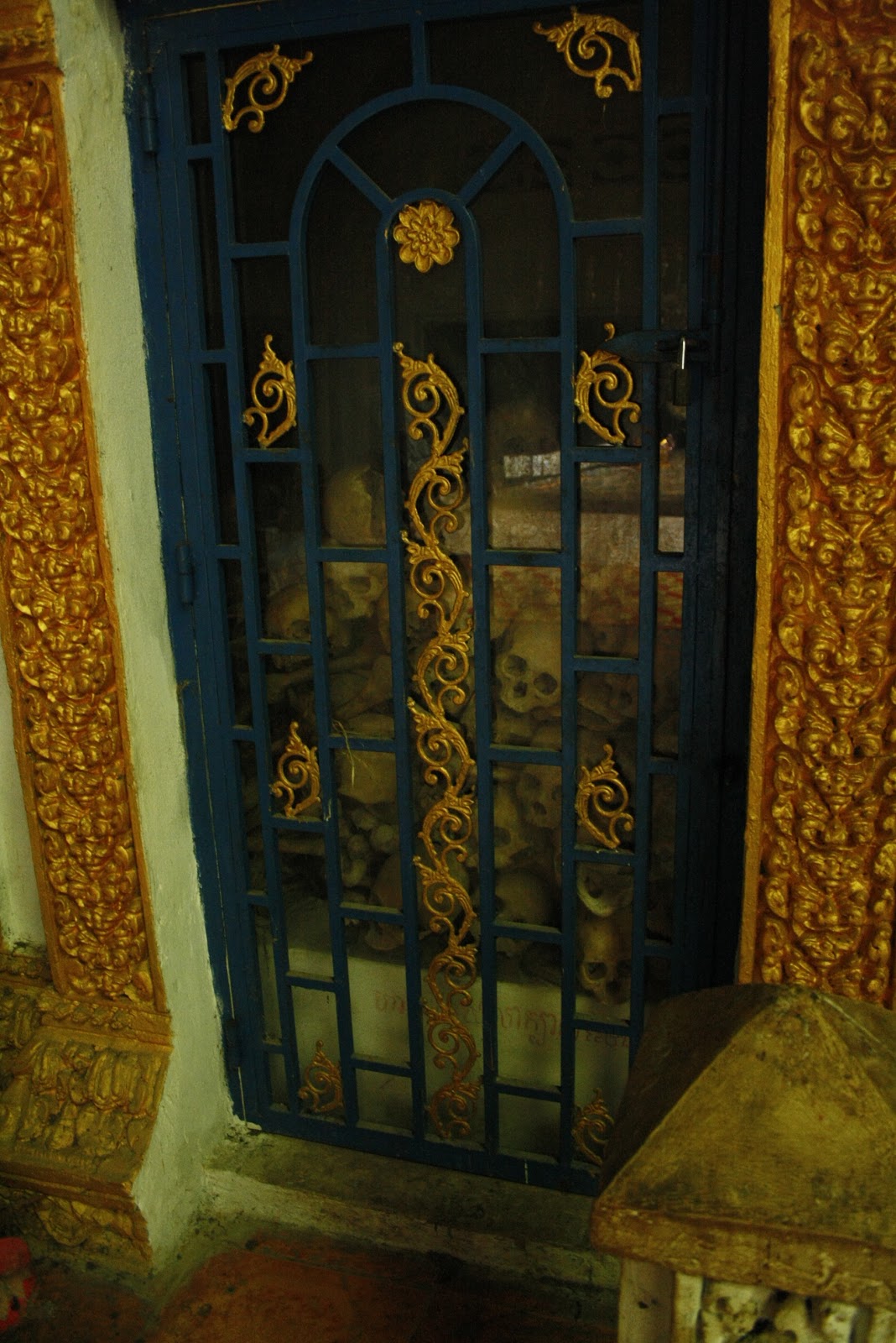
Der stuermische Empfang, den uns die leicht verzweifelt anmutenden Tuktuk-Fahrer in diesem kleinen Ort drei Busstunden suedlich von Siem Reap bereiten, laesst uns schnell ins naechstbeste nicht-empfohlene Guesthouse fluechten. Zudem zeigt sich die Regenzeit heute ebenfalls von ihrer stuermischen Seite, so dass wir es nicht eilig haben, das neu eroberte Zimmer zu verlassen. Am naechsten Tag gibt's dann aber das ganze Programm mit dem Besten, was Battambang touristisch zu bieten hat (der Ort an sich ist nicht gerade eine Kulturhauptstadt, auch nicht zur Hauptsaison). Zuerst geniessen wir einen Morgenkaffee mit Thom, unserem Fahrer fuer heute, in einem kleinen Strassenkaffee, wo uns all seine Freunde, ebenfalls Fahrer, das Leid der Kundenlosigkeit jetzt in der absoluten Low-Season klagen. Dann geht's auf zur - zumindest unter Backpackern - beruehmtesten Attraktion hier: dem Bambootrain. Auf uralten Gleisen (einspurig) einer laengst vergessenen Bahnlinie brausen wir auf einer Bambusholzkonstruktion auf zwei Stahlrollen, die von einem einfachen Dieselmotor angetrieben wird, zu einem kleinen Dorf, bestehend aus ein paar Huetten und einer Ziegelbrennerei. Der Bambuszug oder "norry" wird von den Einheimischen auch schon mal zur Befoerderung von Reissaecken benutzt und ist das ideale Transportmittel, da einfach, schnell und guenstig. Wenn zwei Zuege kreuzen muessen, wird derjenige, der die geringere Last befoerdert, kurz vom Gleis gehoben und weiter vorn wieder draufgesetzt und weiter geht's. Wir besuchen ausserdem Kambodscha's erstes und einziges Weingut - naja, einen Versuch war's wert. Unser letzter Halt gilt einem indisch angehauchtem Tempel auf einem Huegel, neben dem sich eine Hoehle befindet. Dort sind Knochen von Opfern aufgebahrt, die waehrend des Khmer Rouge Regimes zum Huegel gefuehrt und dort umgebracht wurden. Das traurige Erbe dieser blutigen Zeit ist im ganzen Land noch sehr praesent.

The rapturous welcome the slightly desperate tuktuk drivers gave us in this town three bushours south of Siem Reap left us fleeing to the next best non-recommended guesthouse we found. Other then that the rainy season showed us its stormy side too, so we could wait to leave our newly concered room. The next day we went on a tour to see the best of Battambang (the town itself is not really draw for culture vultures) . First we enjoyed our morning coffee in a small local cafe with Thom, our driver for the day where all his friends (mostly drivers themselves) were moaning over the lack of customers now in the absolute low-season. Next we went to the most well known attraction (at least among backpackers): the bamboo train. On ancient railtracks (only oneway) we slided on a bamboo construction on two rolls which is powered by a simple diesel engine. We stopped at a small village with a few huts and a brickfactory. The "norry" is also used by the locals to transport bags of rice and is the ideal means of transport for it is easy, fast and cheap. If two trains need to cross, the one with the smaller load is lifted off the track and put back a bit further down the line. Apart from riding this thing, we visit Cambodia's first and last winery - well, we gave it a try. Our last stop was at a temple with an Indian touch perched on a hilltop. Nearby lies a cave where the Khmer Rouge used to bring people and kill them. Their bones and skulls are displayed at a little shrine. The sad legacy of this bloody aera is still vividly present in the whole country.


Freitag, 10. Juni 2011

Die Tempel von Angkor - The temples of Angkor

Wir sind bei einem weiteren Hoehepunkt unserer Weltreise angekommen! Wir besuchen die Tempelruinen von Angkor, darunter die einzigartige "Mutter aller Tempel": Angkor Wat. Einst als Tempel des Koenigs und Mittelpunkt des Angkor-Reiches erbaut, gilt die Ruine von Angkor Wat als groesstes religioeses Gebaeude der Welt. Die kunstvollen Reliefe an allen vier Gallerien zeigen Szenen des damaligen Lebensalltags sowie tanzende Asparas, goettliche Nymphen. Jede von den 3000 Asparas in Angkor Wat ist einzigartig, so findet man 37 verschiedene Frisuren unter den Nymphen. Aber Angkor Wat ist nur eine der zahlreichen Ruinen in der einstigen Stadt, die im 12. Jahrhundert erbaut wurde. Am Hoehepunkt des Khmer-Reiches wohnten im Gebiet rund um Angkor Wat 1 Million Menschen. Im Vergleich dazu war London zur selben Zeit mit 50'000 Einwohnern ein bescheidenes Oertchen. Zu den eindruecklichsten Ruinen zaehlt fuer uns nach 3 Tagen Tempelhopping der Prasat Bayon mit seinen ueber 200 riesigen, aus Stein gemeisselten Gesichtern (alle dem Anlitz des Koenigs Jayavarman nachempfunden). Der mit Baumwurzeln durchzogene Ta Phrom ist einer unserer Favoriten (und der Lieblingstempel unseres Tuktuk-Fahrers Piron) wegen seiner Dschungelathmosphere. Hier wanderte Angelina Jolie als Lara Croft durch die Ruinen. Noch mehr Abenteuerstimmung kommt aber in Beng Mealea auf, einer Tempelruine 50 km oestlich von Angkor. Der Tempel hat einen aehnlichen Grundriss wie Angkor Wat, ist aber mehrheitlich vom Dschungel ueberwachsen, so man sich vorkommt wie einer der ersten Entdecker hier. Zwischen den verwitterten Steinbloecken rumzukrackseln gefiel uns so gut, dass Boris' Hose mittendrin den Geist aufgegeben hat und zwischen den Beinen riss. Wenigstens war so fuer die Luftzirkulation gesorgt!

We reached another highlight of our world trip! We visit the temple ruins of Angkor, among them the famous "mother of all temples": Angkor Wat. Built as the temple of the king and center of the Angkorian empire, the ruin of Angkor Wat is the world's biggest religious building. The skillfully carved reliefs in all of the four galleries show scenes of the everyday life at the building time and dancing Asparas, heavenly nimphs. Every one of the 3000 nymphs is unique and one can find 37 different hairstyles among them. But Angkor Wat is just one of the many ruins in the former city of Angkor which was built during the 12. century. At the peak of the Khmer empire there were 1 million people living here. Compared to this number London was just a small village with its 50'000 or so inhabitants. After 3 days of templehopping among the most impressive ruins for us Prasat Bayon with more than 200 giant stonefaces (all resembling that of king Jayavarman). With its jungle atmosphere due to huge treeroots overgrowing the ruins, Ta Phrom is one of our favorites (and the favorite of our tuktuk driver Piron). Angelina Jolie alias Lara Croft strolled through the ruins here. Even more adventurous is Beng Mealea, situated 50 km east of Angkor. The temple's layout resembles the one of Angkor Wat but is heavily overgrown by the jungle, so you feel like one of the first discoverers here. We liked climbing among the weathered stone quadres so much that Boris' pants capitulated and ripped through the middle. At least the airflow was garanteed now!


Dienstag, 7. Juni 2011

Si Phan Dong - 4000 Islands

Ganz im Sueden von Laos, nahe der kambodschanischen Grenze, ragen viele kleine Inseln aus dem (zwischenzeitlich braunen) Mekong. Die meisten dieser Eilande werden von Wasserbueffeln und Reisfeldern dominiert. Auf Don Det und Don Khon hat sich eine kleine Backpackerszene etabliert mit einem Angebot an kleinen Bungalows, Bars und Kayaktouren. Die meisten Reisenden kommen hierher, um zu relaxen und andere Reisende zu treffen. Ansonsten gleicht das Inselleben sehr dem auf dem Festland und man kann wunderbar mit dem Fahrrad durch die Reisfelder tingeln, verborgene Wasserfaelle erkunden (darunter den groessten in Suedostasien) und mit etwas Glueck kriegt man den seltenen aber unfoermigen Irrawaddy Delphin vor die Linse.

In the deep south of Laos, next to the Cambodian Border many small islands loom out of the (temporarily brown) waters of the Mekong river. Most of the islands are the terrain of water buffalos and ricefields. On Don Det and Don Khon a small backpacker scene can be found which offers small bungalows, bars and kayak tours. Most travellers come here to relax and meet other travellers. Besides that, the island resembles the mainland very much and it is great to bike through the ricepaddies, explore hidden waterfalls (the biggest in southeast asia among them) and if you're lucky you can spot the rare but ugly Irrawaddy dolphin.


Hollaendische und Irische Groessen mit den Schneges auf Fahrradtour Dutch and Irish Greats with the snails on a bike tour

Pausensnack